


Imagine walking into a physical store where the shelves are messy, the lighting is poor, and the cashier is slow. You’d likely leave without buying, just like customers online, which highlights the benefits of professional eCommerce website design.
Now think about your eCommerce store. The website is your storefront, and the same rules apply. If it’s confusing to navigate, slow to load, or doesn’t feel trustworthy, your visitors will simply bounce, and likely never come back.
Assess design problems using customer feedback and observed behavior on your own store, rather than assuming a universal percentage applies.
Assess design problems using customer feedback and observed behavior on your own store, rather than assuming a universal percentage applies.
Assess design problems using customer feedback and observed behavior on your own store, rather than assuming a universal percentage applies.
Professional design is worth considering when it removes a measurable obstacle between a shopper and a completed order. This guide explains which improvements to prioritize, when a full redesign is unnecessary and how to judge the return on the work.
Why Professional eCommerce Website Design Matters
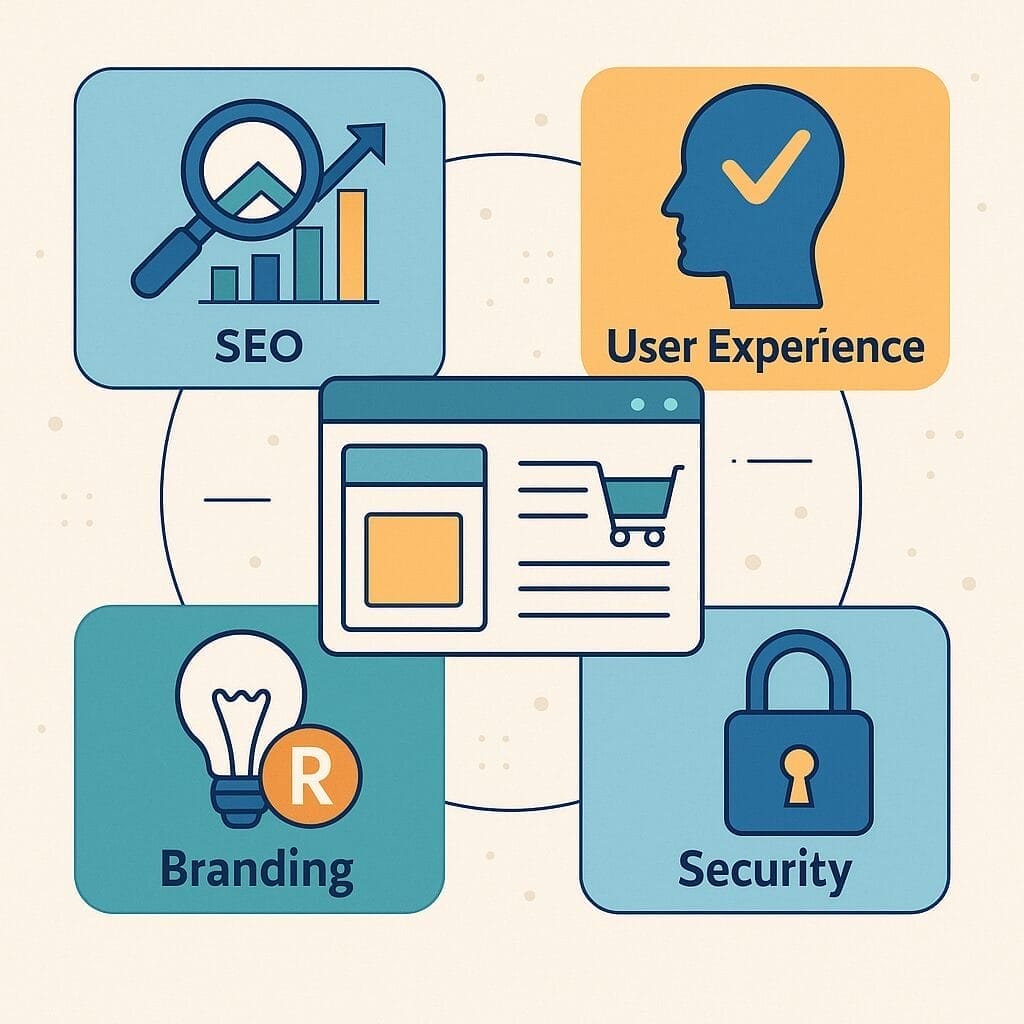
Professional design goes beyond looks: it’s about function and impact. It’s the strategic integration of design, usability, branding, and SEO to create an experience that attracts, engages, and converts customers.
Here’s why it’s essential:
- First Impressions Count – Users form an opinion of your site in 0.05 seconds.
- UX Directly Impacts Revenue – A smooth checkout flow reduces cart abandonment.
- Search Visibility Depends on Design – Clean architecture and speed boost SEO rankings.
- Brand Consistency Builds Trust – Strong visuals reinforce brand identity and customer loyalty.
UX investment has no universal return. Estimate the value of a change from your own traffic, checkout completion and contribution margin, then compare that value with its implementation and maintenance cost.
If you want to maximize ROI from your store, explore our Website Design Services for eCommerce tailored for online businesses.
1. Enhanced User Experience (UX): Turning Visitors into Customers
User experience is the backbone of a successful online store. When customers find it easy, fast, and enjoyable to shop on your site, they’re far more likely to purchase.
What Great UX Looks Like:
- Quick Loading Times: It should take less than three seconds for pages to load. Slow sites frustrate users.
- Clear Navigation: Menus must be intuitive, with logical product categories.
- Optimized Checkout: Fewer clicks, fewer fields, and multiple payment options.
- Engaging Product Pages: High-quality images, zoom features, and detailed descriptions.
Use Google’s Core Web Vitals to assess loading, responsiveness and visual stability. Combine those measurements with real checkout tests; a performance score alone cannot explain every lost sale.
Case Study: Walmart
For example, test whether oversized product images or third-party scripts delay the purchase button on a mid-range phone. Correct the bottleneck and compare performance and checkout completion before and after the release.
Want to reduce cart abandonment? Discover our eCommerce Optimization Services designed to improve user journeys.
2. Mobile-Friendly & Responsive Design

Review your own mobile traffic and conversion data. Check product images, size selectors, delivery details and payment errors on actual phones instead of assuming that a responsive theme automatically provides an easy checkout.
Why Mobile-First Design Matters:
- Mobile users shop on the go; they need fast, thumb-friendly navigation.
- Google ranks mobile-optimized sites higher (mobile-first indexing).
- Conversion rates increase when the design adapts perfectly across devices.
The responsive eCommerce design approach ensures that your store delivers a seamless shopping experience across desktop, tablet, and mobile devices.
Ask a new shopper to find a product and complete a test order on mobile. Observe where they hesitate; those moments provide a more useful design brief than a generic conversion benchmark.
3. SEO-Friendly Website Structure

A lovely website is useless if no one can discover it. That’s where SEO-focused design comes in.
Key SEO Design Benefits:
- Clean Code: Makes it easier for Google to crawl and index your site.
- Optimized Architecture: Clear product categories and breadcrumb navigation.
- Schema Markup: Enhances product listings with star ratings, price, and availability in search results.
- Image Optimization: Fast-loading, alt-tagged images help rank in image search.
A clear site structure helps shoppers and search engines discover relevant products. Google recommends linking from menus to categories and from categories to products in its ecommerce navigation guidance.
Want to improve rankings? Explore our tailored SEO Services for eCommerce stores.
4. Stronger Brand Identity & Trust

Your brand isn’t just your logo, it’s the feeling customers get when they visit your store. A professional design ensures every element aligns with your identity.
What Branding Through Design Includes:
- Consistent color palette, fonts, and visuals.
- High-quality product photography that reflects professionalism.
- Trust-building elements: badges, testimonials, and clear return policies.
Case Study: Warby Parker
Warby Parker’s minimalist, professional website design helped them stand out in the crowded eyewear market. Their consistent branding across the site and social channels reinforced customer trust, contributing to rapid growth.
5. Higher Conversions & Revenue

Design isn’t just cosmetic, it’s psychological. Small design tweaks can have big impacts on conversions.
Conversion-Boosting Design Elements:
- Prominent “Add to Cart” and “Buy Now” buttons encourage quick decisions.
- Urgency Signals: Stock alerts (“Only 3 left!”).
- Social Proof: Reviews, testimonials, and UGC.
- Simplified Checkout: One-page checkout with auto-fill options.
Check whether customers see delivery charges early, can correct input errors and understand available payment methods. Review the reasons shoppers give for leaving in Baymard’s checkout research, then validate the relevant issues on your own store.
Mini Case Study: Gymshark
A useful redesign experiment changes a specific source of friction, such as an unclear size guide, and measures completed orders. Keep traffic sources and promotions comparable before attributing an improvement to design.
6. Improved Security & Compliance

Customers won’t shop if they feel unsafe. A professional website includes:
- SSL Certificates: Essential for secure transactions.
- GDPR & CCPA Compliance: Protects customer data.
- Firewall & Anti-Malware Protection: Keeps the site secure from breaches.
- Many store owners confuse the web design vs development aspect of eCommerce, but while design emphasizes visuals and user experience, development ensures security, performance, and long-term scalability.
Display accurate business details, clear returns terms and the payment methods you actually support. Trust badges should reflect real services or certifications, rather than serve as decoration.
Protect your store with our Web Design & Development Services.
7. Scalability for Future Growth

Plan for catalog growth, variants, stock synchronization and peak traffic. Ask your developer which limits have been tested and what additional hosting or integration work growth would require.
Scalable Design Features:
- Easy to add new products.
- Integration with payment systems & shipping providers.
- The capacity to enter foreign markets with features that support several currencies and languages.
Choosing the right technology is crucial: evaluating the best eCommerce platforms helps ensure your store is aligned with future growth and scalability.
The Cost of Poor Design
Here’s what happens when you neglect professional design:
- High bounce rates: users leave after seconds.
- Lost SEO rankings: poorly structured sites don’t rank.
- Abandoned carts: complex checkouts push buyers away.
- Weakened trust: customers doubt your credibility.
The Baymard Institute estimates that $260 billion worth of sales are recoverable solely through better checkout design.
Actionable Tips for eCommerce Store Owners
Here are 5 practical steps you can apply today:
- Test site speed using Google PageSpeed Insights.
- Check mobile responsiveness across devices.
- Simplify checkout: reduce fields and steps.
- Use heatmaps (e.g., Hotjar) to see where users drop off.
- Display trust signals like SSL, reviews, and secure payment logos.
Following eCommerce development best practices, such as optimizing speed, simplifying checkout, and prioritizing mobile-first design, can significantly boost conversions.
Want a free audit of your site? Contact us for Website Design & SEO Services.
Frequently asked questions
How often should I update my eCommerce website?
Does professional website design help with SEO?
How much impact does speed have on sales?
Can I grow my store without redesigning the website?
Conclusion
Professional eCommerce website design isn’t just about making your store look good. It’s about building trust, improving SEO, scaling for growth, and maximizing conversions.
Your website is the core of your digital marketing strategy. If it’s not designed to convert, all your efforts in SEO, paid ads, or social media marketing will underperform. A strong professional eCommerce home page design combined with user-focused category pages ensures you turn visitors into loyal customers.
Don’t let design hold you back. Let’s build your professional eCommerce website today and turn visitors into loyal customers.
Decide whether you need a redesign or a focused fix
| Observed problem | Start here |
|---|---|
| Few qualified visitors | Investigate acquisition and search intent before commissioning a redesign. |
| Product views but few cart additions | Review offer, images, product details, compatibility and delivery clarity. |
| Cart additions but few completed orders | Test charges, payment failures, required fields and mobile checkout. |
| Changes are slow or integrations fail repeatedly | Assess platform and development constraints. |
Record the baseline, define one measurable problem and agree on a test. Compare completed orders and contribution, with similar traffic and promotions, after the change. A before-and-after comparison can suggest an effect; an appropriately designed controlled test provides stronger evidence.
Use our development checklist for implementation and platform-selection guide when the limitations are structural. If product information is the problem, start with better product descriptions.
Not sure where the friction is? Contact our ecommerce design team with your store URL and the stage where customers drop off, or message us on WhatsApp for a free 10-minute audit.

Pingback: Best eCommerce Platform: Costs and Selection Checklist